



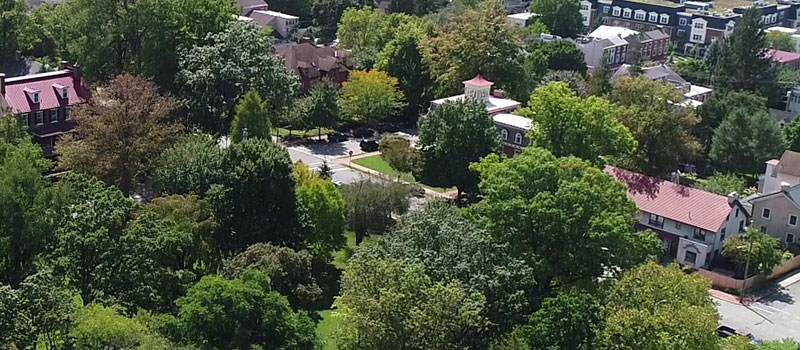
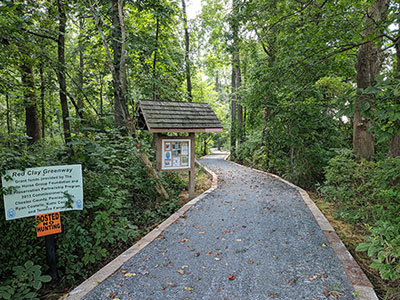
Trails and greenways in urban areas are valuable amenities for recreation, transportation, and public health. The Parrish Trail in Kennett Square Borough is part of the Kennett Greenway and is a well-used and well-loved community asset.
How it Works
Traditionally, urban "green spaces" such as meadows, wooded areas and other natural areas were found only in parks, but more recently the way we think about urban green spaces has expanded to include plazas, streetscapes, green infrastructure, street trees and any other proliferation of greenery in in the urban public realm. This tool examines the process of establishing, expanding and improving publicly accessible urban green spaces, both in terms of parks and green infrastructure.
As a first step, communities should identify where urban green spaces are desired. This could be as a component or feature of particular kinds of land developments; in specific locations as a stand-alone improvement project; and/or retrofitted into existing public spaces like sidewalks and parks. Intentional and thoughtful involvement of residents and other stakeholders in determining the desired location of future urban green spaces, as well as how these greenspaces should function, will ultimately lead to more successful projects that have the greatest benefit and utility to the community. Urban green spaces in the public realm can be identified in a municipality's comprehensive plan, official map, and/or ordinances (zoning/SLDO), as well as in special studies like open space, recreation, and environmental resources plans. The desired function and placement of urban green spaces should be addressed whenever creating/updating one of these plans or ordinances.
A municipality may also consider adopting design standards where it wishes to establish a cohesive environment common to the municipality. The development and/or improvement of urban green spaces can be implemented by the municipality through public works projects or by the private sector through zoning and subdivision ordinances requiring these design decisions in the land development process. Grants from public and private institutions are common sources of partial funding for the development of urban green spaces.
Benefits
Environmental Benefits
Urban green spaces can improve air quality, mitigate the urban heat island effect, reduce stormwater runoff volume, mitigate flooding and provide habitat for wildlife. Urban forests are particularly valuable- they serve as windbreaks, stabilize steep slopes, reduce erosion, allow stormwater runoff to infiltrate, and buffer dissimilar uses.
Public Health
Increased outdoor recreation opportunities promote physical and emotional health and general well-being and pleasing aesthetics.
Energy Conservation
Greening in urban environments reduces the urban heat island effect. Vegetation can serve as a windbreak, can provide shade for adjacent buildings and pavement, and can help reduce energy used to heat and cool buildings. Additionally, recreation facilities within walking distance of where people live reduce fossil fuel consumption to drive to more remote locations. Green stormwater infrastructure manages stormwater on-site, reducing the need for water treatment, which requires energy.
Increased Property Value
Proximity to open space and parks has been shown to increase property value, which can lead to increased property tax revenue for municipalities and school districts.
Economic Development
Establishing quality green spaces and green infrastructure in urban locations can enhance the urban environment, attracting new businesses, customers and residents, and spurring economic development in urban centers.
Community Cohesion
Parks, green spaces, and plazas in urban areas are gathering spaces that welcome everyone in the community, regardless of age, race, or economic status. They can serve as venues for community events and public art displays that bring people together and provide a sense of place.
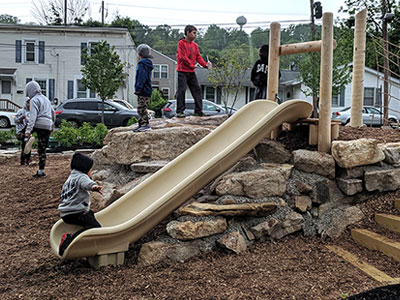
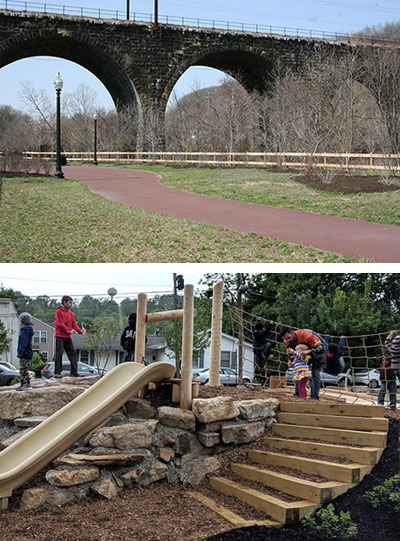
Nature-based play areas like Palmer Park in the City of Coatesville are becoming more popular in urban areas. A type of "playground," nature-based play confers the many benefits of playing in nature without having to leave town.
Get Started
An urban municipality interested in establishing parks, recreation facilities, greenways, forests, plazas, streetscape improvements, and other types of green infrastructure should revise its comprehensive plan to identify areas where these uses would be located and methods for implementation. Some considerations may include: locations where residents lack access to a park within a ½ mile and locations of urban heat islands where greening could provide cooling benefits. Many municipalities also have plans that focus specifically on open space, recreation, natural resources and green infrastructure. Additionally, an official map is an effective regulatory tool to identify parcels and corridors that could accommodate urban green spaces.
The municipality should review its zoning ordinance to add these uses to the applicable zoning district or create a new zoning district or overlay that would specifically accommodate or require these uses. Ordinances should provide requirements, criteria, design standards, and potentially incentives to ensure high-quality amenities are achieved. A requirement for greenspace within a development should be included within the zoning ordinance, and the design criteria for that greenspace be included in the subdivision and land development ordinance. Official maps can be used to identify locations of future greenspace.
Requiring Green Space in Ordinances
The following are ideas for strategies to incorporate green spaces into municipal ordinance requirements:
- Apply greenspace requirements in zoning within specific zoning districts, overlay districts, to specific uses (commercial, mixed-use, etc.), or for developments above a certain size.
- Require a certain percentage of a development be dedicated as green space. The required area could be scaled or tiered to require a larger percentage as the scale of the development increases.
- Use a greenspace point system for new development and then provide examples of "greenspace" requirements — like trees, planters, planting beds, public plazas, water features, etc. — that equate to a certain number of points.
- Require greenspace in the zoning ordinance but have the specific requirements in the SLDO to allow for flexibility that may be appropriate and necessary in urban centers, and particularly on smaller lots.
- Consider fee-in-lieu of some or all greenspace on a site as an option where there are unique challenges, although this approach is not preferable. Using fees collected, a municipality can provide greenspace within the vicinity of new development in alignment with its comprehensive plan.
Types of Urban Green Space
Municipal policy makers should be flexible regarding the location of urban green spaces and should think broadly about what constitutes an urban green space. The desired function of these spaces — whether for recreation, natural resource protection, or green infrastructure — will dictate the type of site needed for the green space.
- Community Parks and recreation amenities. Larger locations such as former industrial sites, river or stream corridors, and inactive rail corridors should be considered for their feasibility to serve as a public open space. A notable example of a transportation facility that was converted into an urban green space is the Rail Park in Philadelphia. The Reading Railroad viaduct is being converted into an elevated urban park replete with swings, public art, pathways, and ample vegetation and is becoming a centerpiece of the communities through which it passes. Similarly, the much beloved Anson B. Nixon Park in Kennett Square was built partially over a former landfill.
- "Green Ribbon" approach. Parks, recreation facilities and urban forests can be combined on a single site or form nodes throughout the community linked by trail networks or sidewalks. Urban forests could be combined with a trail network along river and stream corridors, helping to stabilize steep banks, improve water quality, reduce air and surface temperatures, enhance trail user experience, suppress noise, improve air quality and serve as a buffer between different areas of the city.
- Downtown greenspace and green infrastructure. Urban green spaces may also take the form of small plazas, pocket parks, closing of certain alleys or streets to vehicular traffic, revitalization of vacant lots, parking lots, or as part of existing or future sidewalks. Green elements like green roofs, vegetated plazas, or stormwater planters may be required to meet stormwater management needs. Roadway modifications can also create opportunities for urban greening through the installation of vegetated bulb-outs and medians.
Design Considerations for Urban Green Spaces
- Safety considerations are paramount. Crime Prevention Through Environmental Design best practices should be incorporated into all urban green spaces ensuring good visibility into and within the site. Designs should adequately protect pedestrians from vehicular traffic.
- Urban green spaces should be sited where they will be most used. Well-used spaces provide more "eyes on the street," which also promotes safety.
- Parking should not dominate in urban settings. Therefore, urban green spaces should be sited in walkable locations.
- Urban green spaces should provide plenty of shade and opportunities for interaction with nature. Native plants adapted to urban conditions should be incorporated into site designs.
- Impacts of the urban green spaces on neighboring properties should be considered when selecting a site for the green space.
- When planning for parks or plazas, these spaces should have multiple points of interest and activities that appeal to a variety of users.
- If an intent of the green space is to mitigate an urban heat island, trees with denser canopies, minimized impervious surface, and light colored pavement materials should be used.
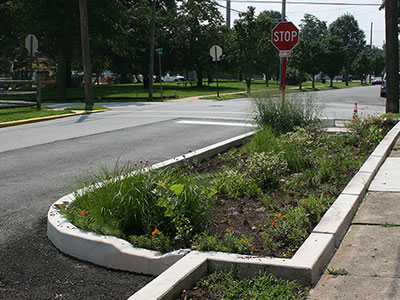
Stormwater planters remove sediment and pollutants from stormwater runoff before it enters storm drains. They also provide an opportunity for lush, garden-like planting in the public realm, significantly enhancing streetscapes.
Considerations
Funding
The primary limitation to establishing these facilities in an urban location is often funding. For this reason, the private sector should be required to invest in urban green spaces on their properties through the land development process. Funding assistance for land acquisition and park development is available from multiple sources in the form of grants. See the resource links section below for specific grant opportunities.
Ongoing Maintenance
Urban green spaces like parks and woodlands require varying levels of maintenance. Naturalistic landscapes tend to be less maintenance-intensive than more manicured landscapes, although public works staff may lack training in managing naturalistic landscapes. Urban trees must be periodically inspected for disease and potential hazards like dead limbs overhanging paths. Partnerships with "Friends" groups, Tree Tenders, land conservancies, and other non-profits can be valuable in helping to maintain urban green spaces.
Defining Needs
A municipality's decision to increase or enhance its urban green spaces depends on a number of factors, and these factors differ based on the function of the green space. For parks and recreation-based green spaces, municipalities should determine whether their residents have adequate access to active and passive recreation amenities. A rule of thumb for urban areas is that everyone should live within a 10-minute walk (roughly 1/2 mile) of a high-quality park or publicly accessible green space. More functional green infrastructure projects might occur as part of a larger initiative, such as a streetscape renovation project that includes green stormwater infrastructure. Some considerations include:
- What are the municipality's needs, and can greening be a part of the solution? Examples could include stormwater management, economic development/downtown revitalization, additional recreation, etc.
- Are there undeveloped parcels that have important natural features, like streams, woodlands, or steep slopes?
- What is the condition of existing green spaces?
- Do opportunities exist for public-private partnerships or for private sector entities to build public or semi-public green spaces?
- What are residents' preferences?
- What performance measures are these greening measures intended to meet, and how can this be effectively regulated?
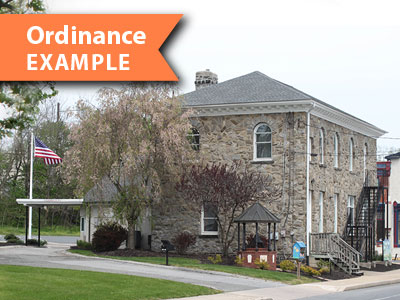
Atglen Borough Zoning Ordinance. The Traditional Neighborhood Development District includes specific standards for streetscaping and green areas within the public realm.
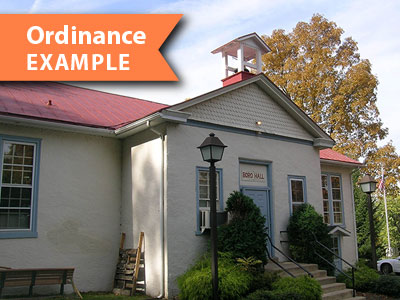
Elverson Borough's Town Center District includes provisions for civic space in building setbacks, wide sidewalks, and vegetation within these spaces.
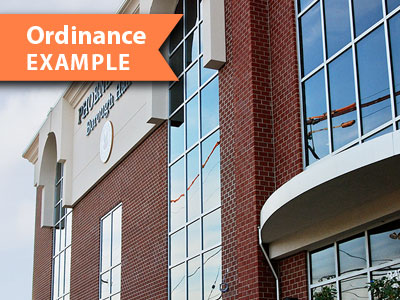
Phoenixville Borough's Zoning Ordinance defines a Mixed Use Growth District just north of "downtown" that requires a minimum 5% of gross tract area be dedicated to public open space. The Open Space section of the ordinance provides further details on the design of urban green spaces: "New public open space shall be provided in new land development projects in the Mixed Use Growth District and shall be designed as spaces to be used by the public. Spaces of 500 to 2,000 square feet can be designed as plazas. Plazas should be built according to a detailed landscape plan that can include ornamental structures, such as fountains, along with benches, low walls and gazebos for sitting. Greens are larger public spaces of 2,000 to 10,000 square feet that provide open lawn areas for informal play or picnicking."
City of Coatesville
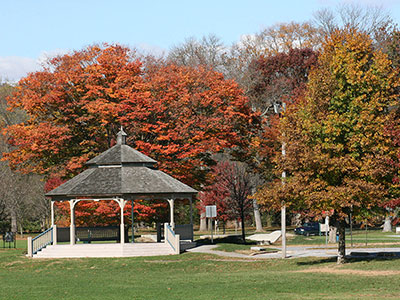
The Riverwalk is a 1/4 mile long walking and biking trail along the Brandywine Creek in the heart of the city. It terminates at a large plaza with a gazebo and spray ground — a popular spot for children to cool off in the summer.
Palmer Park is being renovated to include "nature play," or naturalistic play equipment that provides sensory experiences and creative risk-taking opportunities that children benefit from when playing in nature.
Downingtown Borough
Kerr Park feels like the heart of the community. It features recreation amenities for all interests from an all-abilities playground to a skate park. The park fronts on the Brandywine Creek and is connected to the borough's popular network of paved trails, making it a popular destination for passive recreation like walking and picnicking.
Kennett Square Borough
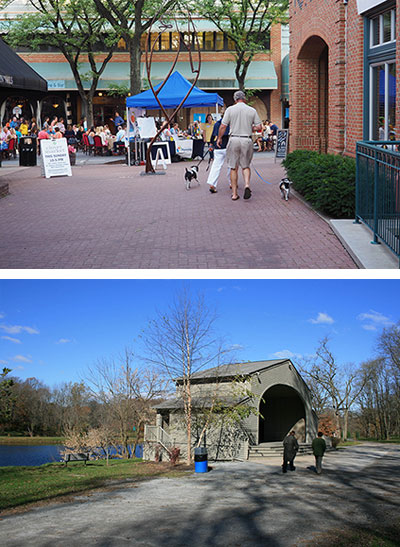
The borough includes several urban green spaces. The Genesis building, built in the late 1990's, includes a plaza with vegetated sitting walls and wide sidewalk frontage that is used for various public events, including but not limited to the Kennett Farm Market.
Anson B. Nixon Park, in the northeastern corner of the borough and extending into Kennett Township, is a 106 acre park built on a former landfill. The park includes three miles of walking/hiking paths, an amphitheater (where the Kennett Symphony plays), fishing ponds, and a full slate of recreation facilities. The park connects to adjacent neighborhoods and other areas of the borough via the Kennett Greenway.
West Chester Borough
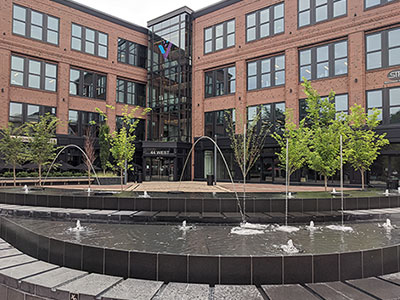
The 44 West office building, completed in 2020 and located in the heart of downtown, features a quasi-public plaza in front of the building that contributes to the vibrant streetscape of downtown West Chester. Although the borough's zoning ordinance requires 10% of a downtown development be devoted to green space, the developer of this building went above and beyond the requirement and designed the plaza to be an iconic element of the building's design out of recognition that this amenity would make the building a landmark and ultimately be good for business.